For those looking to improve their digital reputation, the question of whether to have a personal website or LinkedIn is a common dilemma. While both platforms are critical for gaining credibility, networking, and career growth, they serve different purposes. Knowing the differences will allow you to focus your time and energy where it will have the greatest long-term value.
The discussion around a personal website vs LinkedIn is not about which platform is better. It is rather about understanding how each contributes to your professional identity. LinkedIn is fantastic for networking and discoverability, but a website provides you with complete control over how you showcase your expertise, achievements, and personal story.
Whether you’re a freelancer, consultant, executive, entrepreneur, or job seeker, a good digital presence is more than just having a profile. In this guide, we compare both platforms, talk about their strengths, and demonstrate how combining the two is a smarter personal branding strategy.
Key Takeaways
- LinkedIn is ideal for networking, recruitment, and professional visibility.
- A personal website gives you complete control over your brand and content.
- Using both platforms together creates a stronger personal online presence.
- Your website showcases expertise, while LinkedIn drives professional connections.
- A consistent brand across both platforms improves credibility and trust.
The purpose here is not to be perfect but rather to make it easier for others to know your worth without having to analyze your profile to figure out what you bring to the table.
Personal Website vs LinkedIn: Understanding the Difference
When it comes to personal website vs LinkedIn, it’s better to consider them as complementary roles rather than competing ones.
LinkedIn is a third-party-owned social networking site. It’s a great platform to network with recruiters, industry professionals, and potential clients. But you are limited by the platform design, algorithms and content restrictions.
A personal website, on the other hand, is a digital asset that you own. It gives you complete control over design, messaging, portfolio display, search engine optimisation and user experience.
It depends on what you want to do professionally. If your priority is networking, LinkedIn gives you instant visibility. If long-term brand authority matters, then a website is more and more important.
Benefits of having a LinkedIn Presence
LinkedIn is still one of the biggest professional networking platforms in the world and an important part of modern career development.
1. Strong Professional Networking
LinkedIn makes it easy to connect with colleagues, recruiters, employers, industry leaders and potential collaborators. These relationships often lead to interviews, partnerships, referrals and speaking engagements. Staying involved helps you expand your professional network beyond your specific industry.
2. Recruitment Visibility
Most recruiters will search LinkedIn proactively before reaching out to a candidate.
With effective Linkedin profile optimisation, often managed through dedicated social media management services, you increase the chances of your well-maintained profile being seen in recruiter searches and industry recommendations.
Optimisation consists of:
- Professional headline
- Keyword-rich About section
- Complete work experience
- Featured projects
- Skills and endorsements
- Recommendations
Small improvements to your profile can significantly improve discoverability.
3. Content Distribution
LinkedIn enables professionals to publish articles, share accomplishments, comment on industry news & participate in discussions.
When you publish consistently, with support from expert content writing services, you’re an active participant, not just someone looking for opportunities. Your content is still subject to LinkedIn’s algorithm, so visibility can change over time.
4. Limitations of LinkedIn
Although LinkedIn offers excellent networking opportunities, it also has important limitations.
These include:
- Limited design flexibility
- No ownership of the platform
- Algorithm-controlled reach
- Restricted customisation
- Heavy competition for attention
Building your entire professional identity on a platform you do not own carries long-term risks.
Benefits of a professional website as a Long-Term Asset
Social media platforms are not your website. Your website is your website.
This is home to everything that relates to your professional identity, and you have full creative and strategic control.
1. Full Brand Ownership
One of the biggest benefits of having a personal website is ownership.
You decide:
- Layout
- Branding
- Navigation
- Portfolio presentation
- Case studies
- Testimonials
- Contact methods
There are no platform restrictions limiting how you present your expertise.
2. Better Search Visibility
A professional website, backed by the right SEO services, can rank on Google for your name, industry expertise, services and published content.
A LinkedIn post quickly falls from the feeds of users; content on your website will continue to attract visitors through organic search.
Your website is therefore a great long-term investment in online personal branding.
3. Demonstrating Expertise
A website allows you to publish:
- Articles
- Research
- Videos
- Speaking engagements
- Client success stories
- Downloadable resources
- Portfolio projects
These assets convey authority in ways a standard LinkedIn profile cannot.
That is one of the best benefits of a professional website, especially for consultants, freelancers, coaches, creatives and business owners.
4. Complete Control Over User Experience
You give visitors the experience you want them to have.
While social media is full of distracting content and ads, a personal website keeps visitors focused on your work and accomplishments.
This greatly enhances personal brand visibility and reinforces professionalism.
Personal Website vs LinkedIn: Which Platform Should You Prioritise?
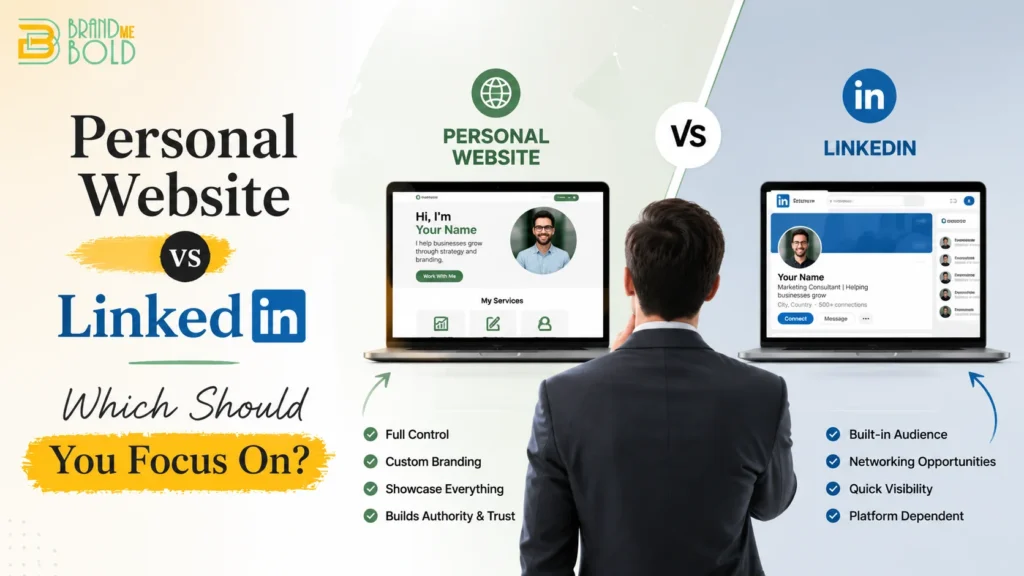
A personal website and LinkedIn support a strong professional identity, but they are not interchangeable. LinkedIn is a place for networking and professional conversations, while a website serves as a central platform that highlights your expertise, achievements, and career path.
Which is right depends on your goals, your industry and your long-term plans. Many professionals have discovered that the best approach is to use both platforms strategically, rather than as alternatives.
| Feature | Personal Website | |
| Ownership | Platform-owned profile | Fully owned digital asset |
| Control | Limited control | Complete control |
| Main Goal | Networking & connections | Brand authority |
| Brand Identity | Profile-based branding | Custom brand experience |
| Design Freedom | Fixed layout | Custom design options |
| Content Format | Posts, updates, articles | Blogs, portfolios, case studies |
| Content Depth | Short professional updates | Detailed expertise showcase |
| Audience | Recruiters, peers, professionals | Clients, employers, global audience |
| Search Visibility | LinkedIn search results | Google search visibility |
| Personal Brand Growth | Builds professional network | Builds long-term authority |
| Professional Story | Career summary | Complete career journey |
| Portfolio Display | Featured section only | Dedicated portfolio pages |
| Work Samples | Limited uploads | Unlimited project showcase |
| Testimonials | Recommendations | Client reviews & testimonials |
| Networking | Strong networking tools | Indirect networking support |
| Job Opportunities | High recruiter reach | Supports inbound opportunities |
| Client Attraction | Through connections | Through expertise & content |
| Content Ownership | Controlled by LinkedIn | Controlled by you |
| Algorithm Impact | Visibility depends on algorithm | Less platform dependency |
| Custom Features | Limited features | Custom pages and tools |
| SEO Benefits | Limited external ranking | Strong SEO potential |
| Professional Image | Supports credibility | Strengthens authority |
| Industry Presence | Community engagement | Thought leadership |
| Long-Term Value | Networking resource | Digital career asset |
| Best For | Jobs, networking, visibility | Branding, expertise, credibility |
A strong digital presence combines LinkedIn’s networking power with the authority and control of a personal website.
What Goes Where: Content Strategy by Platform
Understanding what content belongs on each platform helps create a consistent personal branding strategy without duplicating the same information everywhere.
Content Best Suited for LinkedIn
LinkedIn works best for content focused on professional engagement and networking.
Share:
- Career updates
- Industry opinions
- Professional achievements
- Short insights
- Networking conversations
- Company announcements
- Thought leadership posts
Content on LinkedIn should be engaging. Comments, discussions and connections help to increase visibility with relevant professionals.
For example, sharing a quick insight after finishing a project or commenting on an industry trend can attract meaningful conversations.
Content Best Suited for a Personal Website
A website should contain deeper, evergreen content that builds authority over time.
Include:
- Professional biography
- Portfolio
- Case studies
- Detailed articles
- Services
- Testimonials
- Media appearances
- Contact information
It’s a website where you can share your expertise without character limits or being at the mercy of algorithms.
If you’re a professional building a name for yourself in competitive industries, a website provides a foundation for long-term personal brand visibility.
Connecting Your LinkedIn and Personal Website
If you are trying to compare personal website vs linkedIn, remember that the best digital strategies do not separate the two. Instead they connect them together to create a whole personal online presence.
Your LinkedIn profile should serve to drive visitors to your website, and your website should serve to drive visitors to your LinkedIn profile.
One simple strategy for connection is:
- Adding your website link to your LinkedIn profile.
- Including your LinkedIn profile on your website.
- Publishing website articles and sharing summaries on LinkedIn.
- Using LinkedIn posts to drive traffic towards detailed website content.
- Maintaining consistent branding across both platforms.
For example, a professional may publish a detailed industry article on their website and then share key insights from that article on LinkedIn. This approach increases engagement while directing audiences towards owned content.
Common Mistakes That Weaken Your Online Presence
Building a digital identity requires consistency. Many professionals make avoidable mistakes that reduce credibility.
1. Treating LinkedIn as a Complete Personal Brand
Your LinkedIn profile is good, but it should not be the only online asset you have. Platform changes, algorithm updates, or account limitations may affect your visibility. You own the platform and the content, so a website is stable.
2. Creating a Website Without Clear Purpose
A professional website should have a defined goal. This is where working with experienced web development services makes a difference, avoiding pages that simply repeat your CV, and instead building a site structured around your expertise, achievements, insights, and results.
3. Maintaining Inconsistent Branding
Align your professional identity on your LinkedIn profile and website. Job titles, job descriptions, photographs or messaging that differ can confuse visitors.
4. Ignoring Search Optimisation
A website that isn’t optimised may not show up when people search for your name or expertise. Publish valuable content, use relevant keywords and keep information up-to-date for better discoverability.
5. Creating Profiles but Not Updating Them
An outdated LinkedIn profile or inactive website can negatively affect credibility. Regular updates show that you are actively developing your career and expertise.
Keeping Your Online Presence Resume-Ready
Your digital identity should always support your professional goals. Whether someone discovers you through LinkedIn, Google, or a professional referral, they should find accurate and current information.
A resume-ready online presence includes:
- Updated professional summary.
- Recent achievements and projects.
- Consistent job titles and descriptions.
- Professional profile photographs.
- Relevant skills and expertise.
- Published work or portfolio examples.
- Clear contact information.
A strong online presence acts as an extended professional profile. It provides more context than a traditional CV while allowing employers, clients, and collaborators to understand your expertise quickly.
Conclusion
The debate about personal website vs LinkedIn is not about choosing one platform and discarding the other. Each has a different purpose in building a successful professional identity.
LinkedIn provides networking, recruiter visibility, and industry engagement. With a personal website, you own it, you can tell a deeper story, and you can show off your expertise without restrictions.
For serious long-term growth, the two platforms combined create a stronger personal online presence for professionals. LinkedIn helps people find and connect with you, while your website gives them a full understanding of your skills, experience and professional value.
Investing in both platforms not only boosts your online personal branding efforts, but also forms a strong foundation for career opportunities, credibility, and professional growth.
At BrandMeBold, we help professionals build exactly this kind of dual presence, combining strategic personal branding with the website and content foundation needed to stand out.
Frequently Asked Questions
Ans. Yes, the best professional advantage is to be on both platforms. LinkedIn is excellent for networking and discovery, but a personal website provides ownership and space to really showcase your expertise.
Ans. The main benefits of having a personal website include greater control over your brand, improved search visibility, portfolio presentation, and the ability to demonstrate expertise through detailed content.
Ans. LinkedIn connects professionals to recruiters, industry experts and potential clients. Through profile visibility, it also enables networking, professional conversations, and career opportunities.
Ans. A professionally optimised website can appear in search results when people look for your name, expertise, or services. Regular content publishing improves discoverability and strengthens personal brand visibility.
Ans. Neither platform is a complete replacement for the other. LinkedIn is better for networking, but a personal website is better for ownership, authority, and long-term brand building. The best thing is to do both.