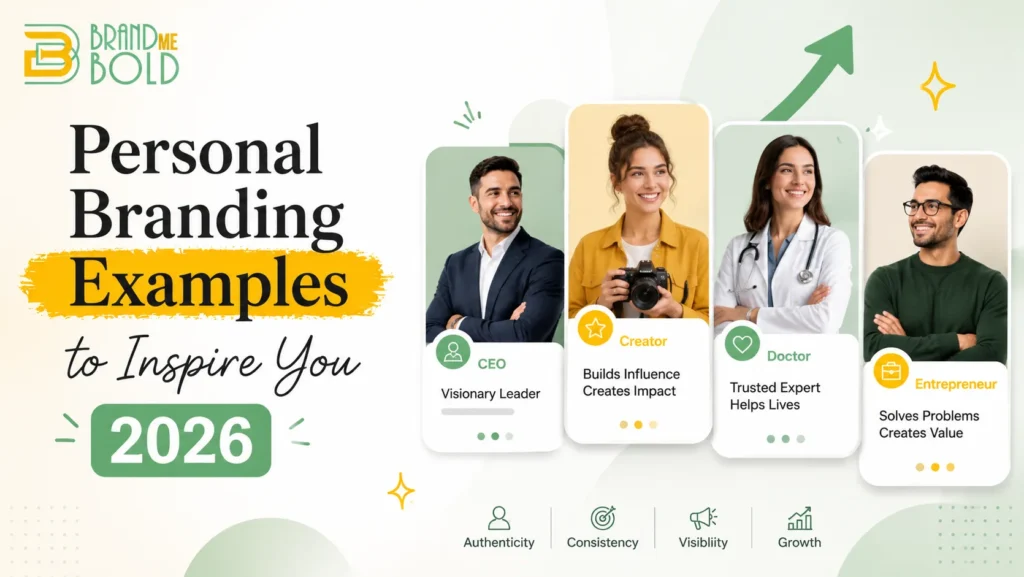
A solid personal brand can be immediately recognized. You know what they do, who they do it for, and how they do it better than others. Effective personal branding examples do not rely on being famous or massive followings. They rely on conveying the right message, valuable content, and a distinctive style that people remember.
The guide presents practical examples of personal branding by various professionals. Each example shows what you could learn from them. You can apply these ideas in improving your social media profiles and creating content. They can also guide your website and public image. Many professionals also invest in content writing services to ensure their messaging stays consistent, valuable, and aligned with their personal brand.
What Strong Personal Brands Share
A personal brand is the public image that people come across based on their interactions with you over the internet. This may include your website, your social content, your LinkedIn account or search engine results.
Successful personal brands usually have several common elements that include:
- A clear area of expertise
- A message that stays consistent
- A voice that feels human
- Proof of skills and results
- Content made for a clear audience
The purpose here is not to be perfect but rather to make it easier for others to know your worth without having to analyze your profile to figure out what you bring to the table.
Personal Branding Examples Worth Learning From
Each of the examples listed in this section has its own unique approach to creating credibility. These approaches are flexible enough to be used by leaders, freelancers and professionals seeking to boost their visibility.
The Expert Educator
An expert educator builds a brand by making hard topics easier to understand. They may publish short LinkedIn posts, simple guides, or videos. Their content answers questions their audience already asks.
This style suits consultants and lawyers. It also works for doctors and coaches. Finance and technology experts can use it too.
To use this approach:
- Pick three topics linked to your expertise.
- Answer one common question in each post.
- Use plain words and real examples.
- Repeat the topics in fresh ways.
One useful post each week can build more trust than daily content with no clear point.
The Visible Founder
A visible founder connects the face of the business with its purpose. Instead of speaking only through a company page, the founder shares lessons and key decisions. Customer insights can also become useful content.
The truth is that people tend to trust people more than images or logos. A communicative founder can help their company build trust and openness. Many founders also rely on social media management services to maintain a consistent posting schedule, engage their audience, and strengthen their online presence without losing focus on running the business.
Founders have a very personal brand, but it does not mean that all aspects of their private life should be exposed. The focus should stay on experiences that support the business story.
A founder can share:
- Why the company was started
- What customers have taught the team
- Mistakes that led to better choices
- Views on changes in the market
The Trusted Executive
Executives need a brand that shows leadership without sounding distant. A strong executive profile often combines business insight with a clear view on people and culture. It may also cover change or industry growth.
Many leaders try to cover too many topics. This makes their brand hard to remember. A better approach is to choose one main area and two supporting themes.
For anyone shaping executive messaging, personal brand statement examples for leaders can help clarify the direction. A useful statement may follow this form:
I help [audience] achieve [result] through [specific strength or approach].
For Example:
I help growing companies build strong teams through clear leadership and practical people systems.
The statement should sound natural when spoken. Avoid broad claims such as “visionary leader” unless the rest of the profile proves it.
The Specialist Freelancer
Freelancers often compete in busy markets. A specialist brand gives people a clear reason to choose one person over many others.
Instead of saying “I offer marketing,” a specialist may say, “I help UAE healthcare brands improve patient trust through clear website content.” The second version shows the service, audience, and result.
Good freelancer branding includes:
- A focused headline
- Work samples
- Client results
- A simple service process
- Reviews or recommendations
This is where professional personal branding services can help. A strategist can turn scattered experience into a clear offer and build content around it.
The Career Builder
Personal branding is highly advantageous for job seekers and professionals as well. They can use it as a way of promoting their knowledge and expertise prior to interviews.
A career brand may include a strong LinkedIn profile and useful comments. Short articles and project examples can add proof. The aim is to help recruiters see more than a job title.
This works best when the person shows evidence. Instead of writing “great communicator,” they can mention a project they led or a result they helped achieve.
People searching for the best self branding examples often expect polished profiles. Yet the strongest career brands are built on clear proof, not design alone.
Personal Brand Websites That Work
A personal website gives you more control than a social profile. You decide what appears, how your story is told, and which action visitors should take.
The best personal brand website examples are usually simple. They make the main idea of their owners clear from the very first screen and tell the visitors what to do next.
An effective personal brand website should consist of:
- A headline that explains your value
- A professional photo
- A brief introduction
- Clear expertise or service pages
- Work samples or case studies
- Testimonials
- An easy contact option
The website should match your public profiles. Different colours are not a major problem, but different messages are. If LinkedIn says you are a leadership coach while the website focuses on general consulting, visitors may feel unsure.
Useful pages and articles can also help people find your name and expertise through Google.
How To Choose Your Approach
There is no need to replicate an entire example. You may simply select those components which suit your purpose.
Ask yourself three questions:
- What do I want to be known for?
- Who should trust me?
- What proof can I show?
Your answers will shape the right platform and content style. A CEO may focus on LinkedIn and interviews. A designer may need Instagram and a visual portfolio. A consultant may benefit most from articles and a personal website.
You can work with a personal branding company when your message feels unclear, or your online presence has grown without a plan. The right team should understand your goals and audience. It should also review your current reputation.
Do not choose a provider only because it calls itself the best personal branding marketing agency. Look at its process and past work. Check whether the team can understand your voice.
Mistakes That Weaken A Personal Brand
Even strong ideas can fail when the basics are ignored.
Trying to speak to everyone
A broad message feels safe, but it rarely stands out. Clear brands name the people they help and the value they offer.
Copying another person’s voice
Inspiration is useful. Imitation is not. Your brand should reflect your real strengths and style.
Posting without a clear topic
Random content may gain views, but it does not always build authority. Keep most posts linked to your chosen themes.
Making claims without proof
Words such as expert, trusted, and leading mean little on their own. Use results and work samples to support them. Client feedback can also add trust.
Ignoring search results
People may search your name before making contact. Old profiles or weak bios can affect trust, and negative content may do the same. Online reputation management, together with SEO, helps ensure that your search results reflect the personal brand you want people to see.
Build A Brand People Understand
The strongest personal branding examples show that success does not come from looking famous. It comes from being clear, useful, and consistent.
Choose one main message. Support it with visible proof. Share ideas that help the right audience. Make sure your profiles and website tell the same story. Your content and search results should support it too.
BrandMeBold helps professionals and businesses shape that story through personal branding and SEO. Its support also covers content, social media, and reputation management.
Frequently Asked Questions
Effective personal brands have an authentic message, a clear target audience, and tangible results. Also, there is consistency between the profiles, content, and search results.
Yes. Most professionals build trust through useful content and strong profiles. Relevant experience and regular interaction also help.
Clear positioning and helpful content work well. A good LinkedIn profile and personal website also ensure visibility over time.
LinkedIn is great for the professional and business niche. Instagram suits creative fields. YouTube helps with teaching, while a website is yours to control.
Professional assistance should be considered when your message or profiles are not clear and consistent. An agency can also support content, SEO, websites, and online reputation.